Even though it’s far from my first time fasting Ramadan, I always have a slight twinge of apprehension before the fast starts.
How thirsty will I get?
Will I be able to manage alright breastfeeding, working, running errands and a household and watching children?
Am I going to reach maghrib each night hanging on for dear life?
Doubts pass through my head as the month approaches, but I also place my trust in Allah that this is a month of mercy and that He will make it easy upon us all. And thus, without fail, I complete (almost, a couple of days were still hard) each fast easier than I thought I would, alhamdulillah. There were some big transitions in our family that happened literally the same week of Ramadan starting that made me a little more nervous as well, but again, Allah helped us through.
Something that helped me get most of everything done at work and home while keeping my energy and spirits up is to try and slow down. I’m the type of person that approaches each day with a plan and idea of what I want to accomplish, and I’ve realized how much importance I place on seeing this plan through, that sometimes it can deeply affect my mood and well-being if I percieve that my day didn’t go to plan. I needed to shift this mindset for this month because I knew I would drive myself and others crazy trying to do all the things while fasting. I told myself that it’s to be expected that you may not be able to get absolutely everything done that you normally would at work or at home due to your energy levels and the extra ibadah you’re filling your time with, so I’m trying to remember to accept that I’m operating on an alternate mode — Ramadan mode — for these 29-30 days.
With that let’s enter into the second third of the month in high gear, settled in our fasts and our ibadah, and ready to continue making the most of each day and night!
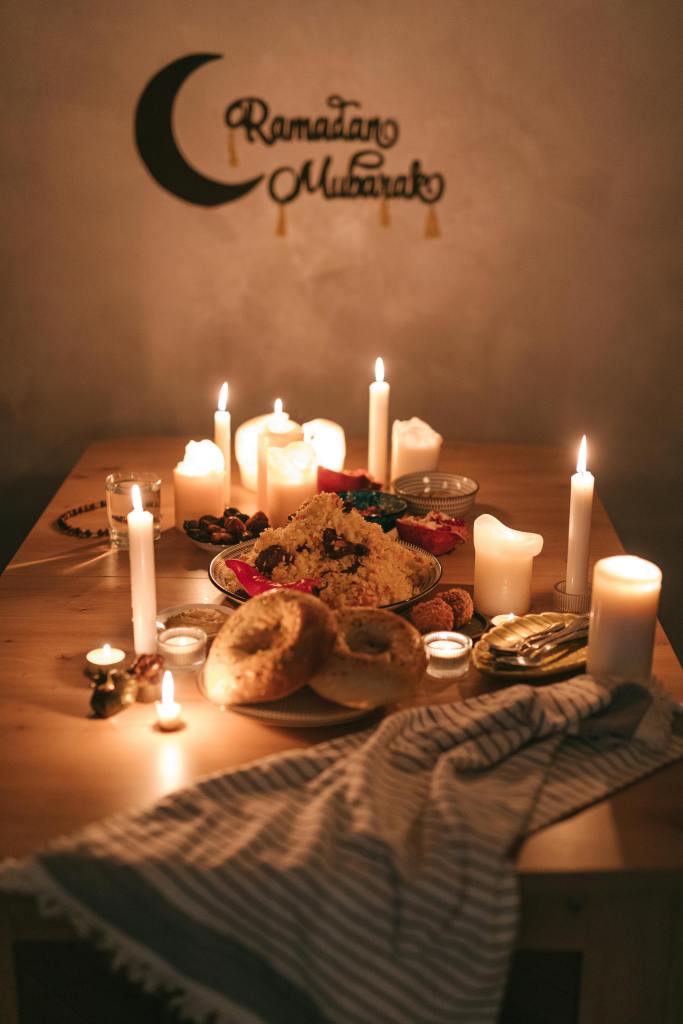
I have been waiting in anticipation for this year’s Ramadan to arrive: cleaning, organizing, decluttering, and decorating our home in preparation for the same disencumbering, polishing, and beautifying I hope our souls will witness during the month. Now that our physical surroundings have undergone a transformation, my mind was prepared to decide what and how I wanted to accomplish taking full advantage of the month.
I identified and planned out six key areas that I am giving extra attention to, insha’Allah, organized into thirds to help me accelerate my actions during the last 10 days of the month, during which we should all strive to seek laylat-ul-qadr. The key areas for me are: qur’an, salah, dhikr, du’a, sadaqah, and relationships.
Here is a grid that organizes my goals for each category for each part of the month. It is my intention to perform these acts for Allah alone, so I have retracted certain numbers of for fear of riya’, but left enough information to help you customize your own goals, insha’Allah.
First Third
Second Third
Last Third
Qur’an
-Read x0 pages after Fajr -Read x0 pages during the day
-Read x0 pages after Fajr -Read x0 pages during the day
-Read x0 pages after Fajr -Read xx0 pages during the day
Salah
-Pray tahajjud -Pray taraweeh
-Pray tahajjud -Pray taraweeh
-Pray x0 minutes earlier tahajjud -Pray taraweeh -Pray an extra X0 minutes of nafl after taraweeh
Dhikr
-Istighfar x00 times -Salawat x00 times -La illaha illa Allah x00 times
-Istighfar x00 times -Salawat x00 times -La illaha illa Allah x00 times
-Istighfar x00 times -Salawat x00 times -La illaha illa Allah x00 times
Du’a
-Read from dua list, after each fard prayer and tahajjud, and upon breaking the fast
-Read from dua list, after each fard prayer and tahajjud, and upon breaking the fast
-Read from dua list, after each fard prayer, tahajjud, after nafl, and upon breaking the fast
Sadaqah
-Give $x amount
-Give $x amount
-Give double $x amount spread out over the nights of 21, 23, 25, 27, 29
Relationships
-Remain calm and collected
-Remain calm and collected
-Remain calm and collected
This is my first time separating my goals based on thirds, but it really helped me to see how I can realistically stretch myself in the last 10 nights and I hope you get some inspiration from it as well.
Insha’Allah, we are all able to maximize our good deeds during this Ramadan and that they are all accepted and that we are able to catch laylat-ul-qadr.
Life has gotten away from me between work, raising a toddler (already a toddler, gasp!), and keeping up with the house and family. I feel like I have had no energy to think about what to write about let alone carve out the time to write a post. However, I do enjoy writing and the feeling of posting an article that hopefully someone will find helpful, so I’m trying to make a better effort.
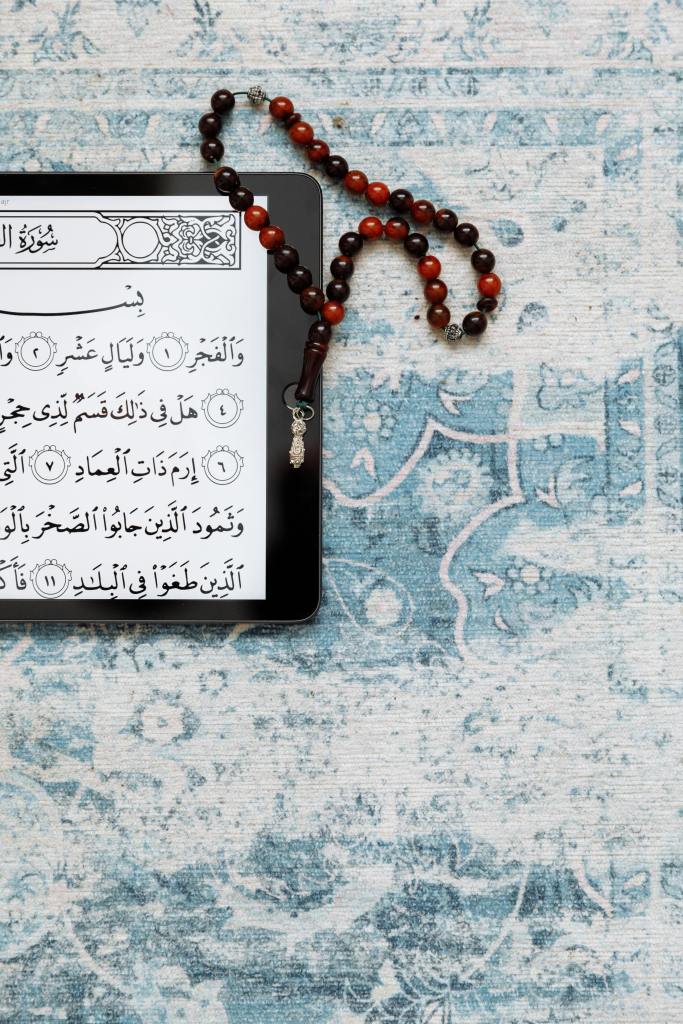
With that, I wanted to share something that I have been doing since the beginning of the year. I made a New Year’s resolution to read the Quran every single day. A couple of months in, I have stuck to it. I made no stipulations on how much I would read everyday, only that I would.
Admittedly, some days I only managed to read one single ayah as I tried my best to keep my eyes open before falling asleep (new mom life!), but still, I can honestly say that 65 days into the year, I have read from the Quran every single day.
The reason that I committed to this daily exercise is because I have a deep desire to understand the Quran and you can’t understand it if you don’t read it. Here’s what I’m doing differently this year to help me connect to and cultivate a love for reading the Quran.
1. Read Quran every single day
I’ve already addressed this. Read the Quran every single day and make it a habit to reflect upon it, even if it’s a single ayah. I personally did not want to commit to a certain number of ayah to read because I did not want to feel discouraged if I did not meet that goal. Generally, I keep reading until I come across an ayah or subject that I do not understand or that I have a strong connection to and want to reflect upon.
2. Write down my thoughts and questions daily
I have a beautiful agenda with lined spaces for each day of the week where I write my thoughts and questions to what I have read. It’s motivating to have a lovely place to write my notes and it’s one more way I have stuck to my daily goal.
3. Keep track of my questions
In that same agenda, I have the monthly calendar before the start of each month. Whenever I have a question or some topic I don’t understand in response to what I’ve read for the day, I will circle that date on my monthly calendar. Some days, I don’t have any questions and some days it feels like I have day after day of concepts I don’t understand.
4. Revisit topics
In my free time (lol) I can look at my monthly calendar where I’ve circled the days I had questions about what I read and try to find the answer to those questions through different sources. Sometimes, I can find explanations on Islamic question and answer sites and sometimes I get led to reading articles or books on the topic. I never know what path a question will lead me down, but that’s part of the fun! On the way to answering my question, I learn a lot more than I originally thought I would.
This is the method that has been working really well for me so far. It appeals to my love of journaling, writing, research, and habit tracking and I think that’s a big reason why I’ve been able to stick to it. I hope this helps someone try and approach learning and loving the Quran in a way that is new and fresh, it’s certainly helped me a lot!
There have been some recent events in my life that have caused me to reflect on the concept of patience or sabr and whether or not I am practicing the type of patience — a beautiful patience — as described in the Qur’an:
By the time, verily mankind is in loss except for those who have faith and perform righteous deeds and enjoin one another to truth and enjoin one another to patience. [103:1-3]
Those who, when a calamity afflicts them, say, “To God we belong, and to Him we will return.” Upon these are blessings and mercy from their Lord. These are the guided ones. [2:156-157]
فَاصْبِرْ صَبْرًا جَمِيلًا
So be patient with a beautiful patience [70:4]
But why is important to practice a beautiful patience and how do we practice it?
And among the people is he who worships God on edge. When something good comes his way, he is content with it. But when an ordeal strikes him, he makes a turnaround. He loses this world and the next. That is the obvious loss. [22:11]
Without patience a person’s faith is not strong and steadfast. Inevitably, that person will face a trial and when faced with that trial that same person will turn away from Allah which not only denies them the hereafter but also the opportunity in the current life rise to the highest degrees by practicing sabr. Thus, since we will all face tests and trials, practicing sabr is the base of our iman.
Luckily, practicing sabr does not simply mean resigning yourself to misery. We need to remember the story of Yusuf and what he said to his brothers after their paths crossed years later:
He who practices piety and patience – God never fails to reward the righteous. [12:90]
When a trial befalls us, it may take years before we see the reward from it, but a true believer never loses faith in Allah’s mercy.
In the Hadith below we learn that true patience is practiced at the first sign of a trial when one is most prone to feeling angry or anxious:
It was narrated that Anas ibn Maalik (may Allah be pleased with him) said: The Prophet (blessings and peace of Allah be upon him) passed by a woman who was weeping at a grave, and he said: “Fear Allah and be patient.” She said: Leave me alone, for you have not suffered my calamity! And she did not recognise him. It was said to her: He is the Prophet (blessings and peace of Allah be upon him). She came to the door of the Prophet (blessings and peace of Allah be upon him) and did not find any doorkeepers there. She said: (I am sorry), I did not recognise you. He said: “(True) patience is only when calamity first strikes.” Al-Bukhari (1283) and Muslim (926).
As the trial continues, sabr is practiced through prayer:
And seek help through patience and prayer. But it is difficult, except for the devout. [2:45]
In addition to prayer, we must strengthen our religious commitment through all of the good deeds that know bring us closer to Allah such as reading Qur’an, enjoining good, giving sadaqah, fasting, and reciting thikr.
Lastly, I will leave you with these two Hadiths as a consolation and encouragement if you are going through a trial. I hope you remember their promise and recite the dua within daily:
“There is no Muslim who is stricken with a calamity and reacts by saying as Allah has commanded: ‘Inna lillahi, wa inna ilayhi raji’un. Allahumma indakah-tasabtu musibati, fajurni iha, wa ‘awwidni minha (Truly, to Allah we belong and truly, to Him we shall return. O Allah, with You I seek reward for my calamity, so reward me for it and compensate me),’ but Allah will reward him for that and compensate him with something better than it.” Sunan Ibn Majah, Vol. 1, Book 6, Hadith 1598
“There is nothing (in the form of trouble) that comes to a believer even if it is the pricking of a thorn that there is decreed for him by Allah good or his sins are obliterated.” Sahih Muslim 2572
It’s that time of year again when many resolve to make positive changes to their diet. This usually involves some variation of a crash diet that will unsurprisingly be abandoned by the second week of the new year. If this sounds familiar to you, I invite you to try a different approach — a more gentle and sustainable approach to your diet goals. Read on to see what the Quran and Hadith have to say about this subject.
The information that can be found on food in the Quran and Hadith has to do with the types of food, the amount of food that should be eaten, and the manner in which food should be eaten. These three aspects combined are the key to having a healthy, realistic and holistic relationship with food.
Types of Food
The Quran mentions two main types of verses about food: one that mentions what food is permissible and another that introduces the concept that what has been made halal is consequently good for us. The second type of verse is seen here:
“O you who have believed, eat from the good things which We have provided for you and be grateful to Allah if it is [indeed] Him that you worship.” (2:172)
Contrary to how this verse is incorrectly understood, Allah is not saying to eat only “the good things” and avoid the bad foods, but He is saying that all of the foods that He has made halal are “good things”.
This is great news for us Muslims! As long as we eat halal foods, we can be sure that we are eating foods that are good for us. There’s no need to exclude entire food groups to be healthy (as is often seen in the countless modern day diets), our Creator knows what is good for us and has made those things permissible. Now, before we go off and indulge in an entire chocolate cake (it’s halal right?), we need to look deeper into our sources to understand what food choices to make.
Note that the Quran mentions the following foods by name:
Drinks
Water (mentioned 100+ times)
Milk (2)
Honey (2)
Wine that exists in Paradise (2)
Olive oil (1)
Plants
Dates (22)
Fruit (14)
Grapes (11)
Grains in general (7)
Olives (6 or 7)
Buckthorn (4)
Pomegranate (3)
Mustard seed (2)
Onion (1)
Herbs, beans and vegetables (1)
Cucumbers (1)
Garlic or wheat (1)
Lentil (1)
Gourd (1)
Banana (1)
Herbage, or Abb (1)
Fig (1)
Halal Animals
Cattle (34)
Birds in general (18)
Camels (11)
Calves (10)
Cows (9)
Sheep (8)
Seafood (5)
Quails (3)
Goats (1)
Hoopoes (1)
Meat in general (1)
Notice that all of these foods are unprocessed, whole foods. Sweets and other indulgent foods existed at the time, however, they are not mentioned in the Quran as part of the good foods granted to us by Allah. Not to say those processed foods are not halal, but by excluding those foods from the Quran and highlighting natural foods, we can assume that the latter are more beneficial for us. After all, the Quran is meant to be guidance for all aspects of our lives, so it is only fitting that the best of Allah’s bounties be mentioned.
Amount of Food
The second aspect with regards to the Islamic approach to food can be found in the hadith about the eating habits of the Prophet (peace and blessings of Allah be upon him). There are several hadith that describe the quantity of food that Muhammad (peace and blessings of Allah be upon him) would consume.
Ibn ‘Umar narrated that the Prophet (peace and blessings of Allah be upon him) said: “The believer eats in one stomach whilst the kaafir eats in seven.” Narrated by al-Bukhari (5081) and Muslim (2060)
He said: “The son of Adam does not fill any vessel worse than his stomach. It is sufficient for the son of Adam to eat a few mouthfuls, to keep him going. If he must do that (fill his stomach), then let him fill one third with food, one third with drink and one third with air.” Narrated by al-Tirmidhi (1381), Ibn Maajah (3349); classed as saheeh by al-Albani in al-Silsilah al-Saheehah (2265)
The Quran also addresses this concept of balanced restraint:
“and eat and drink but waste not by extravagance, certainly He (Allah) likes not Al‑Musrifoon (those who waste by extravagance)” (7:31)
As we can see, not only do we need to eat what is halal and ideally whole and natural foods, but we need to practice moderation in quantity and fill no more than two thirds of our stomachs with food and drink. This is known in our days as “portion control” and is the single, major contributing factor to staying trim and healthy. Even too much of a good thing can make you ill, cause indigestion, and other unpleasant effects so controlling our consumption is crucial to achieving lasting health.
Manners with Food
In the Hadith are many examples of the manners the Prophet (peace and blessings of Allah be upon him) exhibited while eating.
It was described by Ibn al-Qayyim as follows: When he put his hand in the food, he would say, “Bismillaah (in the Name of Allah), and he told people to say this when eating. He said, “When any one of you eats, let him mention the name of Allah. If he forgets to mention the name of Allah at the beginning, let him say Bismillaahi fi awwalihi wa aakhirihi (in the name of Allah at its beginning and at its end).” Saheeh hadeeth, narrated by al-Tirmidhi (1859) and Abu Dawood (3767)
This Hadith tells us to give thanks before and after each meal. By doing so we slow down and acknowledge the blessing of the meal and understand it’s value to our health and well-being. Once we truly internalize the meaning of this Hadith we will naturally choose meals that we know are truly good for us and are the best of Allah’s bounties.
He never criticized food at all. If he liked it, he would eat it, and if he did not like it, he would leave it and not say anything. Narrated by al-Bukhaari (3370) and Muslim (2064)
Here, we learn that it is fine to have preferences for certain foods but to not criticize any food that is not to our liking. Again, this highlights the position of gratitude that we need to practice with all halal food.
He commanded people to eat with their right hands and forbade them to eat with their left hands. He said, “The Shaytaan eats with his left hand and drinks with his left hand.” Narrated by Muslim (2020)
This Hadith discusses the unseen consequences of eating and drinking with the left hand. However, from a practical standpoint, by eating and drinking with only the right hand, it consequently causes us to slow down our consumption during meal times. Eating slowly has a whole host of benefits and it also allows the stomach to communicate to the brain when it is full before it reaches maximum capacity and also is better for digestion.
It was also reported that he said, “I do not eat reclining.” Narrated by al-Bukhaari, 5083
What is understood by this Hadith according to an-Nawawi is: “I do not eat like one who wants to eat a great deal and sits comfortably; rather I sit like one who is going to get up quickly and I eat little.” We are instructed to not eat in a manner that is too relaxed that may lead to overeating.
While there is more detailed information that can be explored about the consumption of food according to the Quran and Hadith, this is meant to provide the most significant points about the Islamic approach to diet. As you can see there is no such concept as a “diet”, but instead, there are daily practices and choices that are made at each meal. This is a very liberating idea in this society where there is an obsession with finding new and improved ways to eat. The Islamic approach is not a fad but are a collection of healthy habits that once put into practice, will become second nature to implement. Surely the information provided in this post will help us reflect upon our patterns of eating and permanently improve them in a way that is blessed and recommended by the One who knows us best.





 So Remember Me